
Botox injections done by a doctor.
Dr. Warner performs therapeutic and cosmetic Botox (OnabotulinumtoxinA) personally in her office. EMG guidance available.
Chronic migraines, TMJ, blinking tics (blepharospasm), sweating (hyperhidrosis), dystonia, spasticity, and more!
At a glance
Re-treatment cycle
About every 12 weeks
Insurance coordination
Prior authorization done by Dr. Warner.
Non-covered & cosmetic pricing
Per-unit pricing or annual subscription option for ongoing treatment. See Fees for current rates.
Complication management
Neuromuscular-trained to recognize and manage Botox complications — she's who other injectors refer to when something goes wrong.
Conditions treated with therapeutic Botox
Initial visits include a focused neurologic exam, discussion of prior treatments, and a customized treatment plan.
Tap any condition to expand details.
Chronic migraine
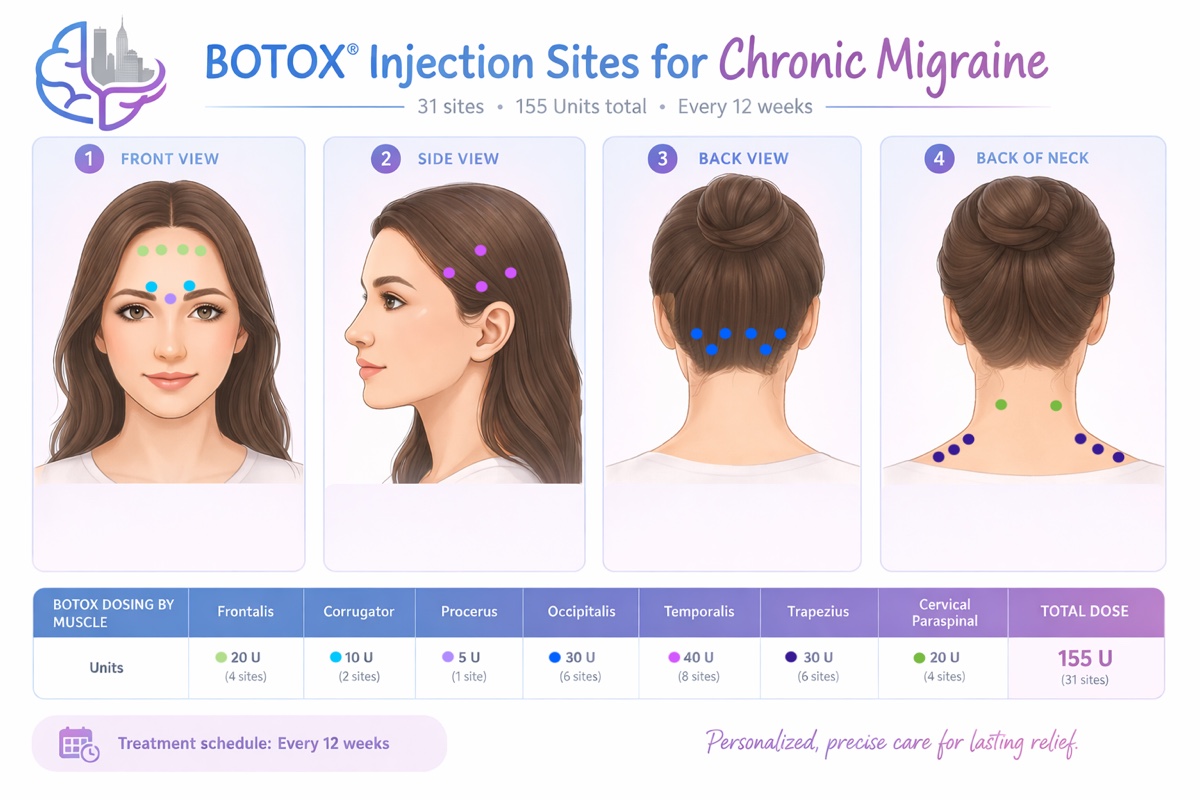
FDA-approved PREEMPT protocol (31 sites) for chronic migraine.
Chronic migraine
FDA-approved PREEMPT protocol (31 sites) for chronic migraine.
FDA-approved for chronic migraine using the PREEMPT protocol (31 sites). See the migraine page for qualification criteria and what to expect.
Cervical dystonia
First-line treatment for neck muscle spasms (torticollis).
Cervical dystonia
First-line treatment for neck muscle spasms (torticollis).
Involuntary neck muscle contractions causing the head to twist, tilt, or shift (torticollis, laterocollis, anterocollis, retrocollis). Often painful. Botox is the first-line treatment, with injection patterns tailored to the muscles actually pulling — not a one-size-fits-all template.
Blepharospasm
Targeted relief for involuntary blinking tics.
Blepharospasm
Targeted relief for involuntary blinking tics.
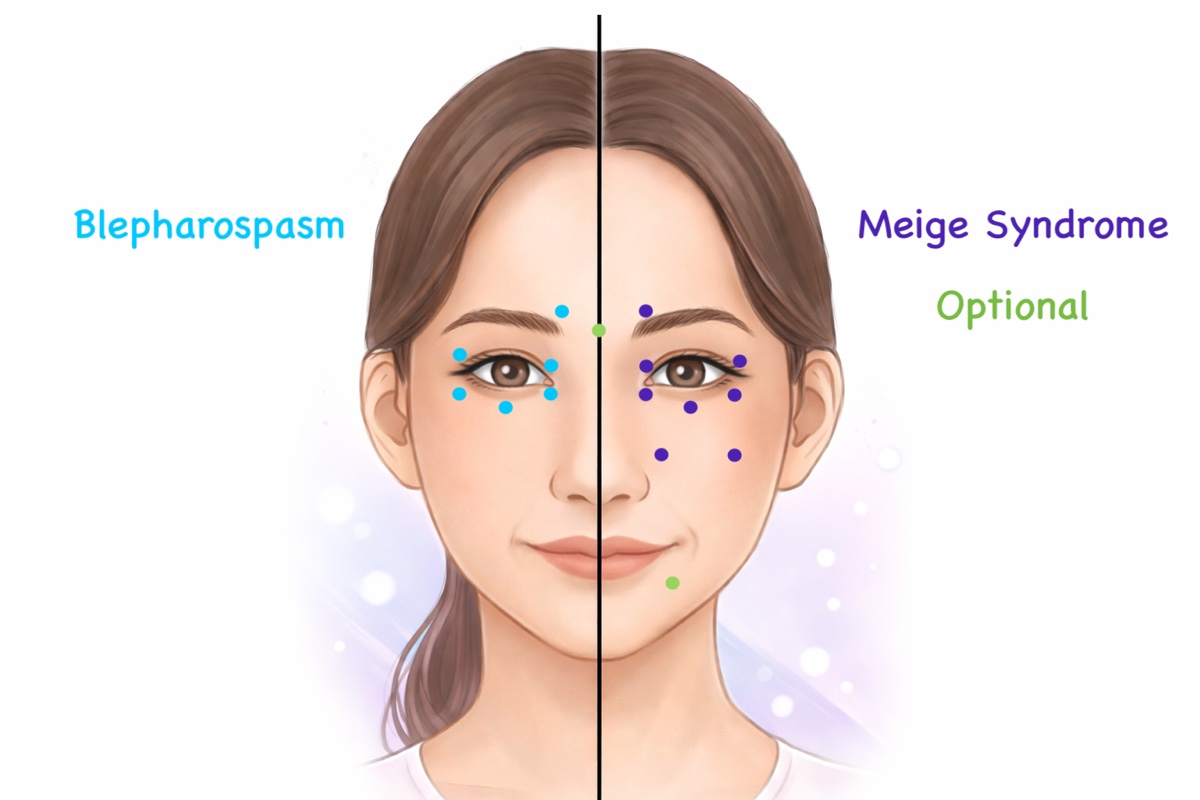
Involuntary eyelid closure or forced blinking that interferes with vision and daily function. Targeted injections to the orbicularis oculi and surrounding muscles can dramatically reduce symptoms.
Hemifacial spasm
Mainstay treatment for facial twitching.
Hemifacial spasm
Mainstay treatment for facial twitching.
Involuntary twitching on one side of the face. Botox is highly effective and remains the mainstay of treatment for most patients.
Meige syndrome
Combined blepharospasm and oromandibular dystonia — careful targeting required.
Meige syndrome
Combined blepharospasm and oromandibular dystonia — careful targeting required.
Combined blepharospasm and oromandibular dystonia (jaw/face/tongue). Treatment requires careful targeting to balance symptom relief with preservation of speech and swallowing.
See the combined blepharospasm/Meige injection pattern figure above.
Spasticity
EMG-guided injections for post-stroke, MS, and brain/spinal cord injury spasticity.
Spasticity
EMG-guided injections for post-stroke, MS, and brain/spinal cord injury spasticity.
Muscle stiffness and involuntary contractions following stroke, brain injury, multiple sclerosis, or spinal cord injury. EMG-guided targeting helps reach deep muscles safely.
Severe primary axillary hyperhidrosis
Long-lasting relief for underarm sweating.
Severe primary axillary hyperhidrosis
Long-lasting relief for underarm sweating.
Excessive underarm sweating that doesn't respond to prescription antiperspirants. Botox blocks the nerve signals to sweat glands; a single treatment typically lasts 4–6 months.
Temporomandibular disorder (TMD/TMJ)
Jaw pain, teeth grinding (bruxism), and tension headaches from masseter/temporalis overactivity.
Temporomandibular disorder (TMD/TMJ)
Jaw pain, teeth grinding (bruxism), and tension headaches from masseter/temporalis overactivity.
Jaw pain, clenching, bruxism, and tension headaches related to overactive masseter and temporalis muscles. Targeted injections can reduce muscle activity, pain, and grinding.
Why a neuromuscular specialist matters for Botox
Three places fellowship training in neuromuscular medicine changes the outcome.
Targeting
Knowing which muscles to inject — and which to leave alone — comes from neuromuscular training, not just injection technique and standard protocols.
Dosing
Doses are individualized, not just generic dosing protocols.
Complication management
If Botox goes wrong — botulism, distant weakness from spread — you need a neuromuscular specialist. At our office, you won't need to go somewhere else for complications.
What to expect at your visit
First visit
- History of the condition and prior treatments
- Full neurologic exam
- Discussion of treatment goals and realistic expectations
- Insurance coordination and prior authorization for Botox drug coverage where applicable (visits are not covered)
- First injection at the same visit when appropriate
The injection itself
- Small-gauge needles without numbing
- EMG guidance available
- Most appointments take 15–30 minutes
- Resume normal activities the same day
- Effects within 3–14 days, peaks at 4–6 weeks
Follow-up & re-treatment
Every 12 weeks. Follow-up visits assess response and side effects, dose adjusting where needed, and re-injection. Between visits, message the office and get same or next day responses.
Pricing & insurance
Insurance-covered indications
For FDA-approved indications (chronic migraine, cervical dystonia, blepharospasm, spasticity, hyperhidrosis), most insurance plans cover Botox when criteria are met. The office handles prior authorization paperwork.
Out-of-network billing applies for the office visit; superbills are provided so you can submit for reimbursement from your insurer.
Non-covered & cosmetic Botox
$350 injection visit plus $15 per unit of medication. Typical doses by area:
- Glabellar lines: ~20 units
- Forehead: ~10–20 units
- Crow's feet: ~12–24 units
- Masseter (TMD/jaw slimming): ~25–50 units per side
Final dose is determined at the visit based on muscle activity. Cosmetic and therapeutic injections can be combined at the same appointment without a second visit charge. See the Fees page for current rates.
Book a Botox consultation
Whether this is your first time considering Botox or you're switching providers — schedule a visit