
Nerve blocks & trigger point injections
Quick, in-office relief for occipital neuralgia, cervicogenic headache, chronic migraine flares, and myofascial pain — performed by a fellowship-trained neuromuscular neurologist.
These are short procedures done at your visit, often with results you can feel by the time you leave. Used as part of a broader headache or pain management plan, not as a substitute for it.
Common reasons
Occipital neuralgia
Sharp, shock-like pain at the back of the head, often radiating up.
Cervicogenic headache
Headache originating from the neck, often unilateral.
Migraine "rescue"
For breakthrough or status migraine when oral medications aren't enough.
Myofascial pain
Tender trigger points in cervical and shoulder muscles.
Occipital nerve blocks
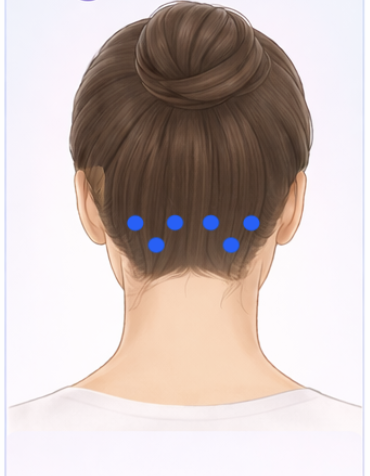
An injection of local anesthetic — sometimes combined with a corticosteroid — at the greater and/or lesser occipital nerves at the base of the skull. Used for occipital neuralgia, cervicogenic headache, and as a procedure-based option for chronic migraine.
Who benefits
- Occipital neuralgia with characteristic sharp, shock-like pain at the back of the head
- Cervicogenic headache originating from the upper cervical spine
- Chronic migraine as part of a broader prevention plan
- Hemicrania continua and other unilateral headache disorders (in selected cases)
What to expect
- Procedure: 1–2 small injections per side at the back of the head; takes about 5–10 minutes
- What it feels like: Brief sting, then a sense of numbness in the back of the scalp
- Onset: Anesthetic effect within minutes; corticosteroid (when used) builds over days
- Duration of relief: Days to weeks for some patients, longer for others; varies by underlying condition
- Re-treatment: Individualized — typically every 4–12 weeks if effective
Trigger point injections
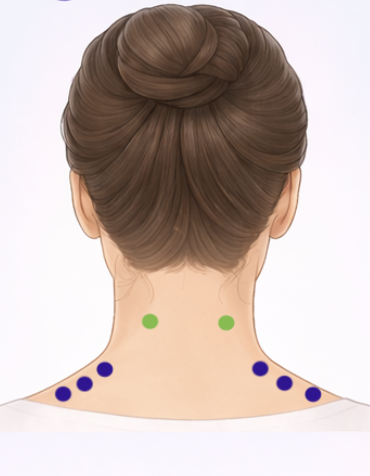
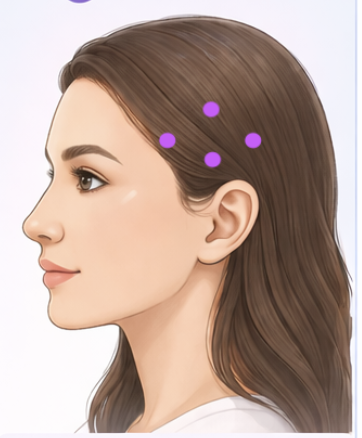
Injection of local anesthetic into palpable trigger points in cervical, shoulder, and upper back muscles. Helpful when myofascial pain is contributing to headache or neck-and-shoulder symptoms.
Who benefits
- Cervicogenic headache with palpable muscle trigger points
- Tension-type headache with significant muscular component
- Myofascial pain syndrome in the cervical, trapezius, or shoulder muscles
- Headache exacerbations driven by neck-and-shoulder tension
What to expect
- Procedure: Several small injections at tender points the physician can palpate; 10–15 minutes total
- What it feels like: Brief discomfort with each injection; localized soreness afterward
- Onset: Some relief within hours; broader effect over the next several days
- Re-treatment: Variable; combined with stretching, posture work, or physical therapy when appropriate
How these procedures fit into your care
Diagnostic value
A successful occipital nerve block can help confirm that occipital nerves are the source of pain, narrowing the diagnosis when imaging is non-specific.
Therapeutic option
For patients with chronic migraine, occipital neuralgia, or cervicogenic headache, repeated blocks can be part of an ongoing prevention strategy alongside medications and other treatments.
Bridge therapy
Useful as a "bridge" while transitioning between preventive medications, after a status migraine, or when a longer-term plan is being established.
Relationship to Botox for migraine
Nerve blocks and Botox for chronic migraine work through different mechanisms and serve different purposes. Some patients benefit from one or the other; some benefit from both at different times. See the Botox for chronic migraine section on the migraine page or the Therapeutic Botox page for details.
Book a consultation
Initial visits include a focused history, neurologic and musculoskeletal exam, and discussion of whether nerve blocks or trigger point injections are appropriate for your symptoms. Procedures are often performed at the same visit when indicated.